HomeArchiveThemesSkyAbout
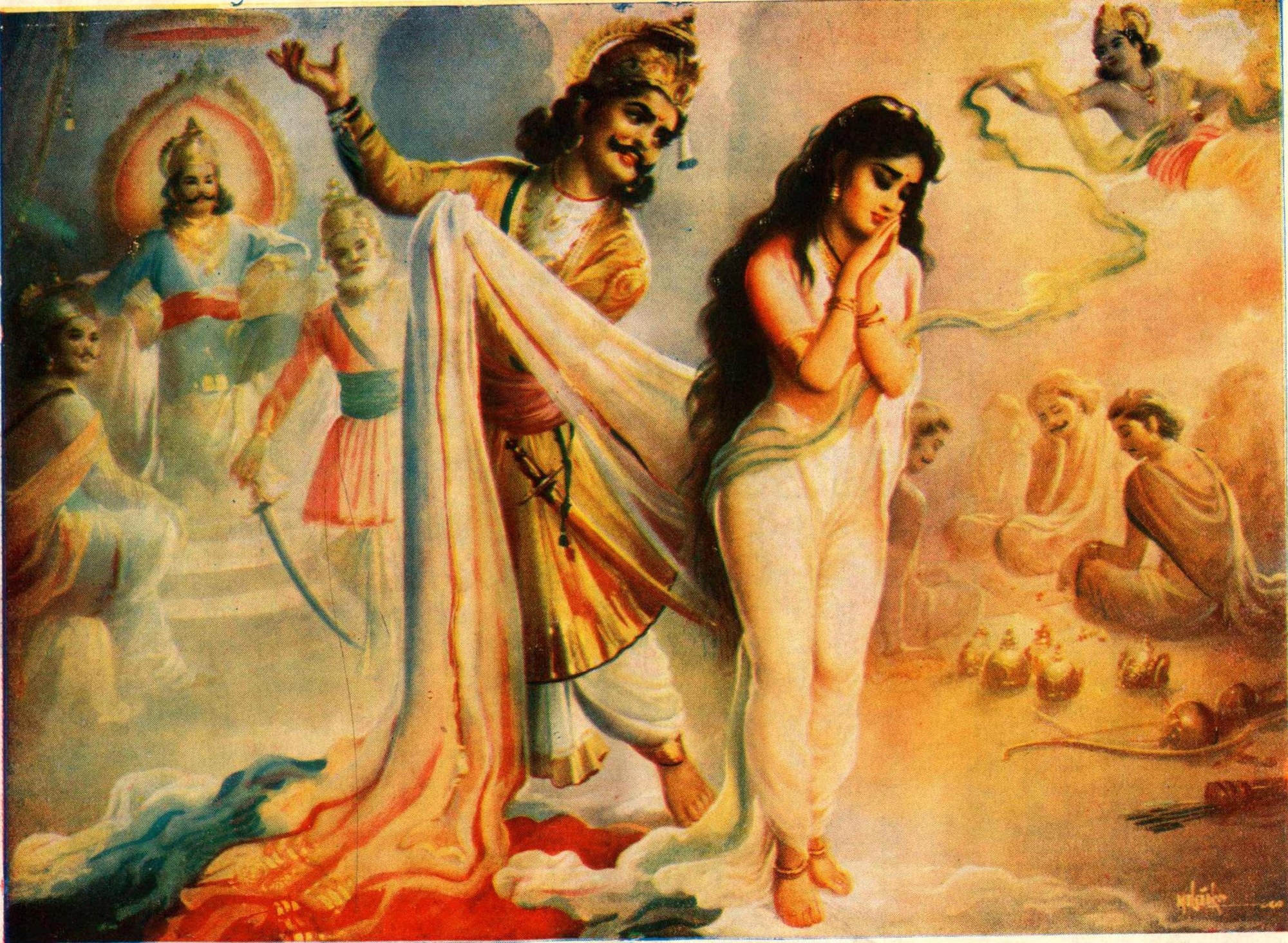
A colour chromolithograph of the disrobing: a crowned prince in a gold robe raises one arm and drags at the white sari of Draupadi, who stands beside him in a single garment with her hands pressed to her cheek and eyes lowered; a great length of pulled cloth streams down and heaps on the floor at their feet. A blue-skinned Krishna hovers at upper right, feeding an endless ribbon of cloth into the pile; an enthroned, haloed king and elders sit at the left, and a row of princes bow their heads among scattered crowns and vessels at the lower right.
Featured · Hindu Pantheon

The Dice Game and the Disrobing of Draupadi

A righteous king who cannot refuse a challenge sits down to a rigged game and loses, in order, his gold, his brothers, himself, and his wife. What happens next in the hall is the most famous rescue in the epic, and the text is not sure who performed it.

Read the retelling

Latest Retellings

All articles
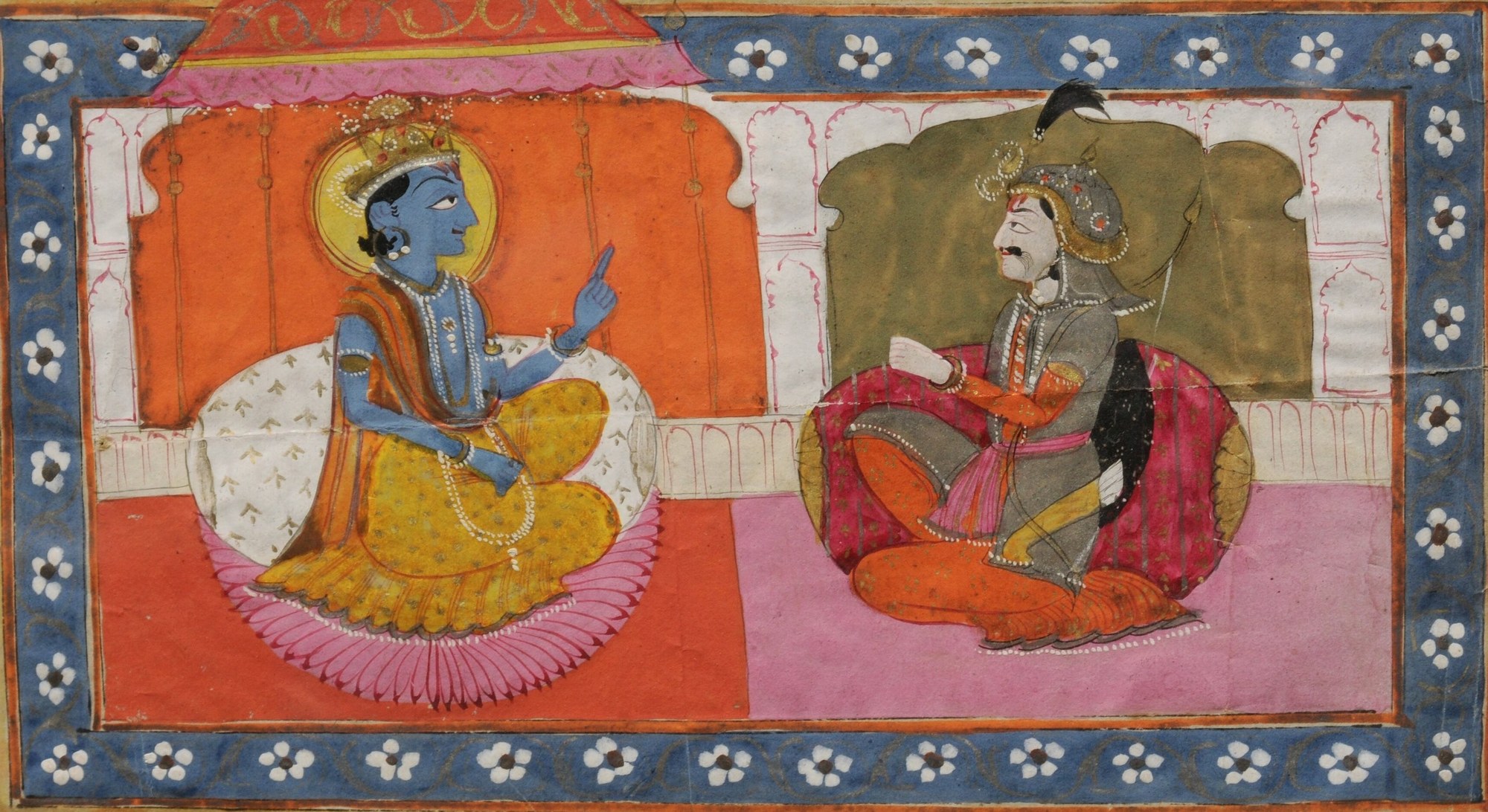
An Indian miniature painting: at left the blue-skinned, gold-haloed and crowned Krishna sits on a white cushion and pink lotus beneath a canopy, his right hand raised with the index finger extended in the gesture of teaching; at right the moustached warrior Arjuna, in a plumed helmet and grey-and-crimson robes, sits cross-legged on a bolster with his hands folded, listening, against a warm terracotta ground within a blue floral border.
Hindu

Karma: The Law by Which Action Sows Its Fruit

The oldest statement of the law is blunt: whatever deed a man does, that he will reap, and by his deeds he becomes good or bad. Centuries later a god on a battlefield finds the one loophole, and it is not the one the earlier sages found.
7 minBrihadaranyaka Upanishad 4.4.5 — 'as a man acts and behaves
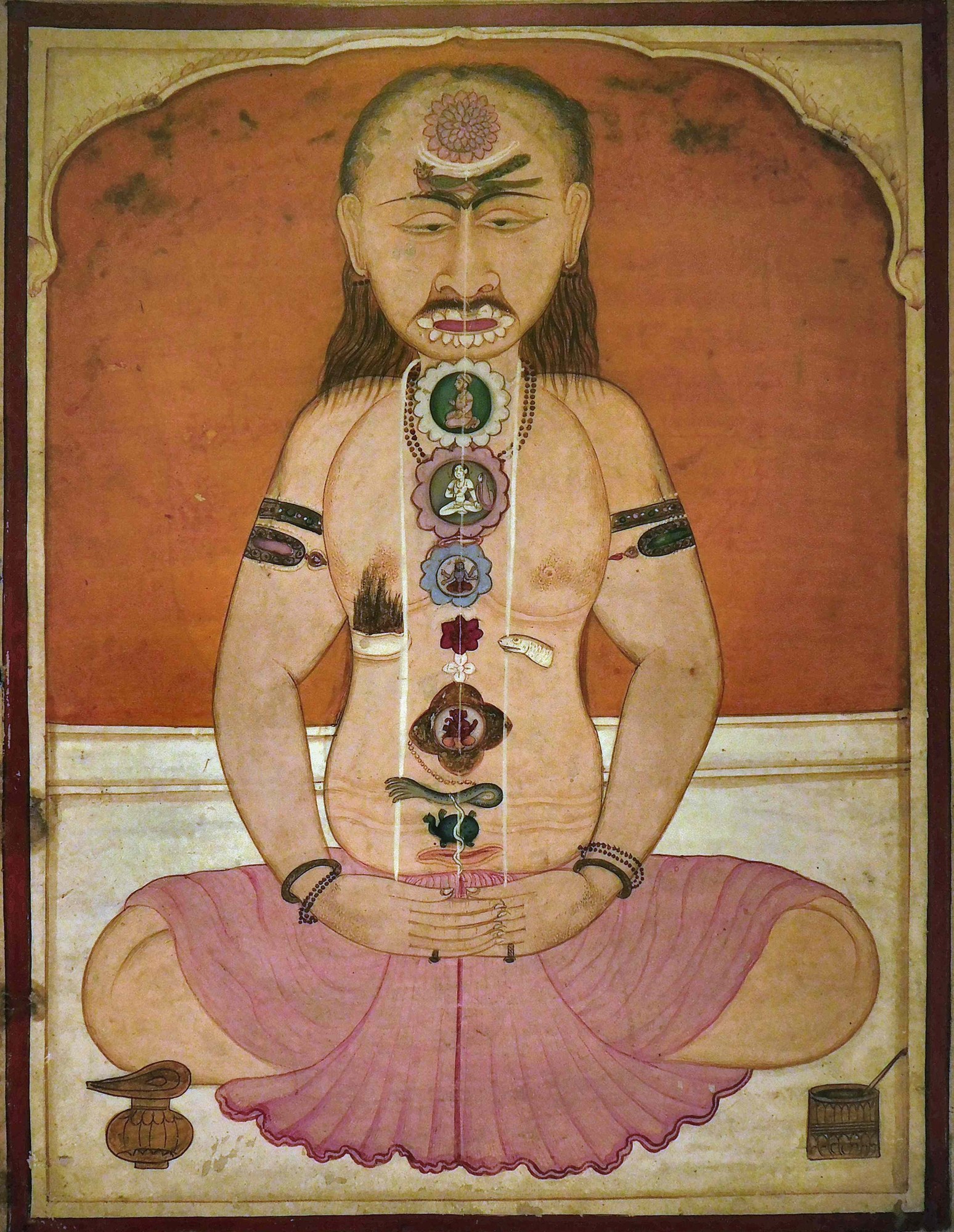
An Indian manuscript painting of a bare-chested yogi seated cross-legged in meditation, his eyes lowered; up the central channel of his torso and neck bloom the coloured lotuses of the chakras, each holding a small seated deity, while a white kundalini serpent coils up from the base of the spine and a large open lotus crowns the top of his head, against a burnt-orange ground within a cusped arch and a dark-red rule border.
Hindu

Moksha: The Cutting-Off of Return

Every heaven in this cosmos empties out eventually and sends its tenant back down to be born again. There is one door that does not open the other way, and the oldest texts describe it not as a reward you are given but as a wanting that stops.

8 minKatha Upanishad 2.3.14
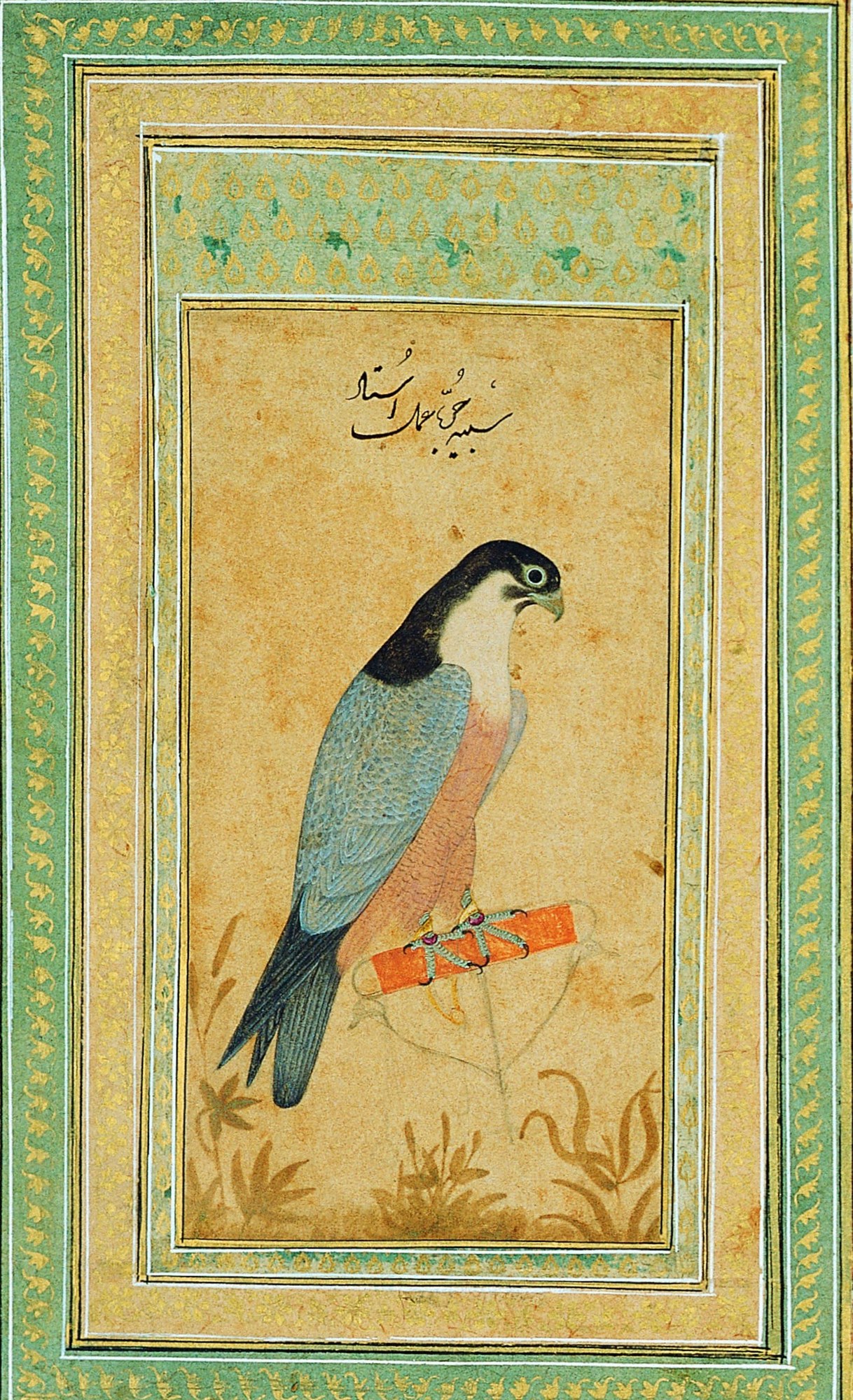
A peregrine falcon perched on a tasselled orange block, its slate-blue back and barred rose breast rendered in fine detail, painted on a plain tan ground with a line of Persian script above, in a gold-and-green ruled album frame.
Hindu

Syena, the Soma-Bearing Falcon

The falcon ranked above all birds, who flew to the highest heaven with no chariot to carry him, seized the god-loved draught from its guardians, and came screaming back to earth wounded by an archer's arrow but bearing the Soma still.

6 minRigveda 4.26
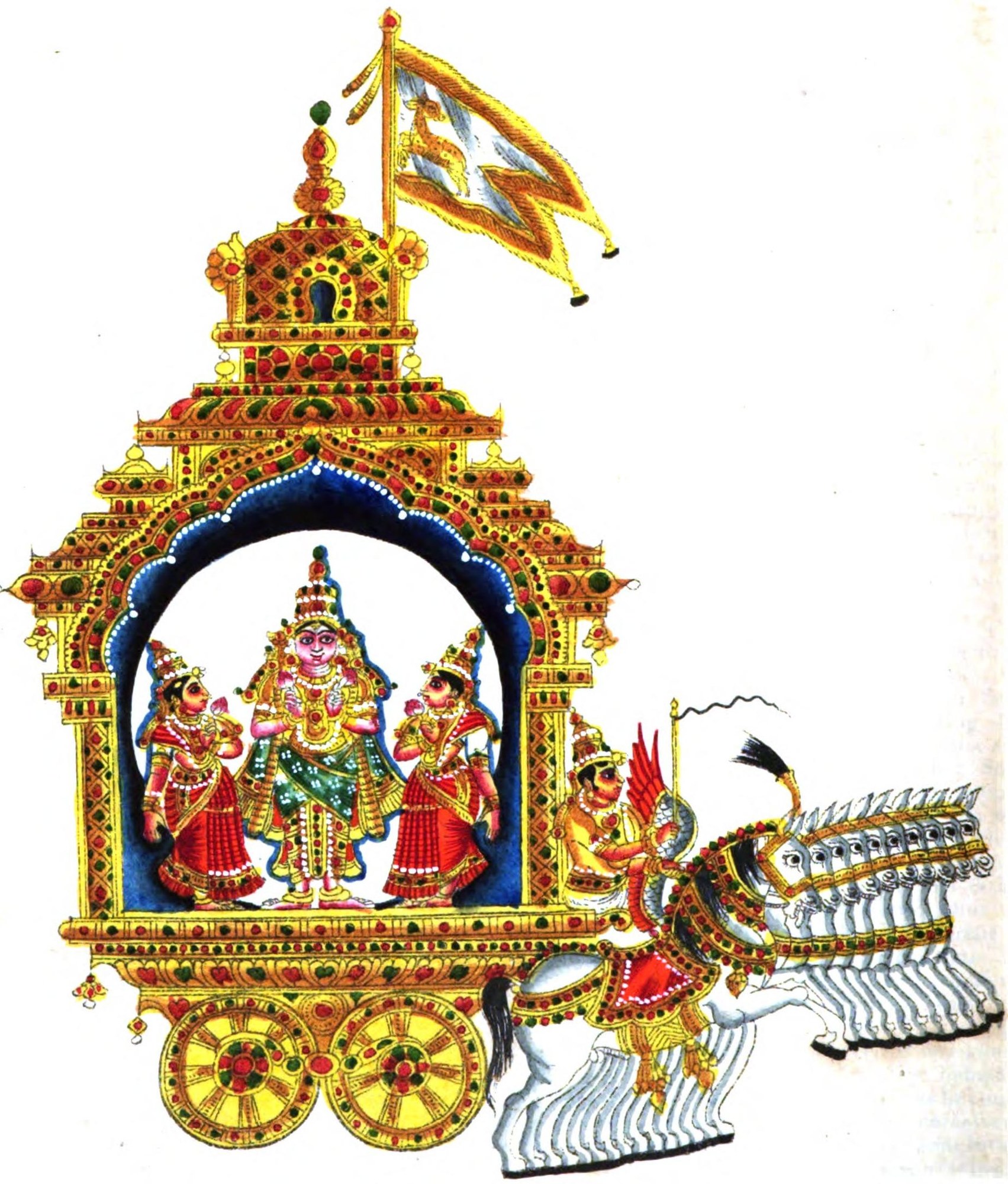
A hand-coloured 1842 engraving of Chandra (Soma), the Hindu moon-lord, standing crowned and jewelled beneath the arch of a golden temple-chariot between two attendant consorts, a pennant flying above; a charioteer drives the team of white horses that draws the moon across the sky.
Hindu

Soma, God of the Sacred Draught

The deified ritual drink pressed for the gods, hymned through the whole ninth book of the Rig Veda: the golden juice strained clear through wool that makes Indra strong to kill and the mortal singer immortal, and the moon-lord he only slowly became.

6 minRigveda
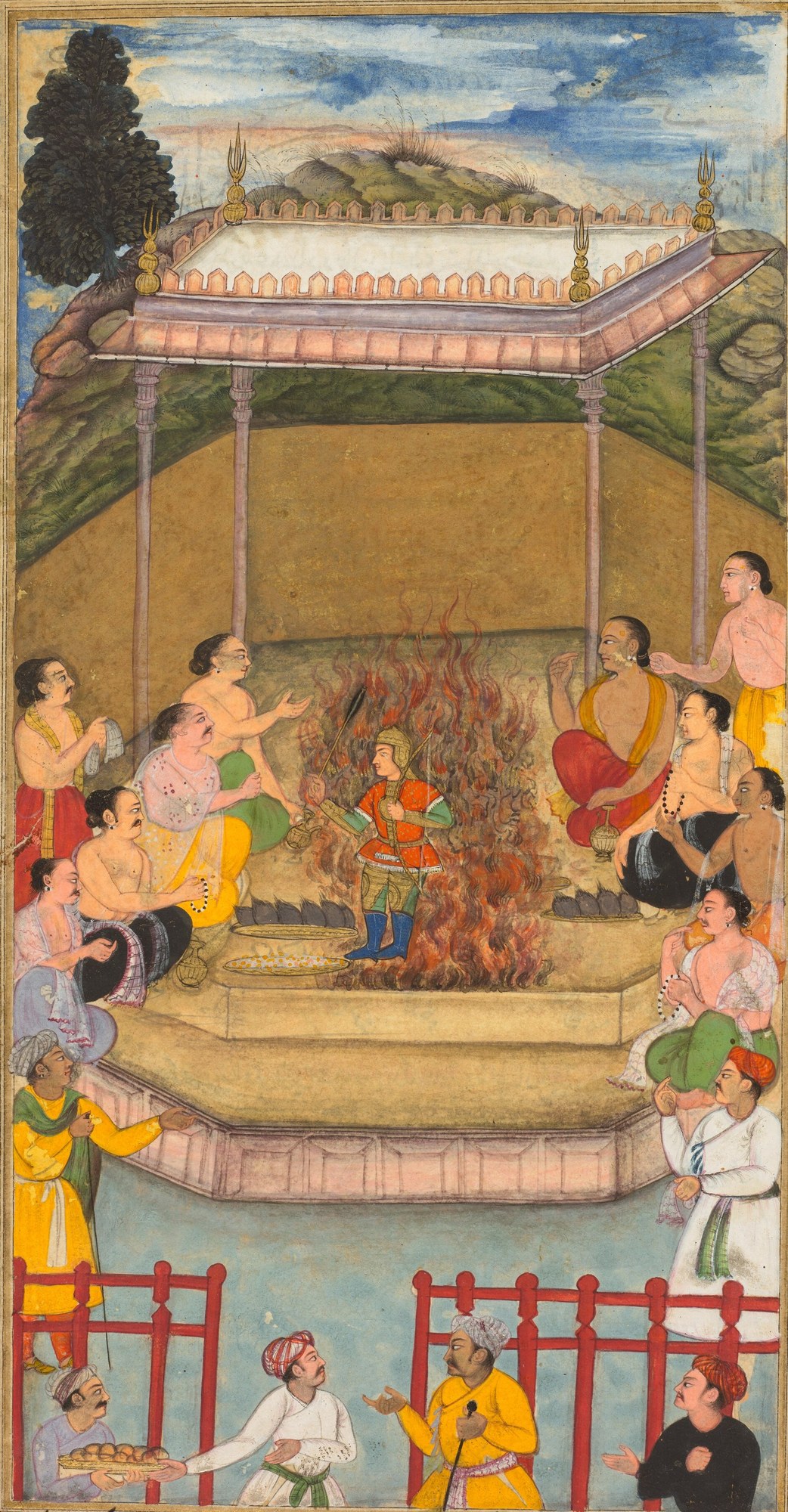
A Mughal manuscript miniature of a fire sacrifice: a tall blaze rises on a raised altar-platform under a pillared canopy, ringed by bare-torsoed brahmin priests seated on the ground with sacred threads and prayer-bead strands, an officiant at left tipping a ghee-ladle toward the flame and offering-trays of grain and bundled darbha grass with gold ritual vessels set on the platform.
Hindu

Yajna: Feeding the Gods Through Fire

The solemn Vedic fire-sacrifice as the axis of a whole religion: three sacred fires drawn out and set in a fixed geometry, four priests each carrying one Veda, and every offering poured into the flame that alone travels to the gods and back.

8 minRigveda 10.90
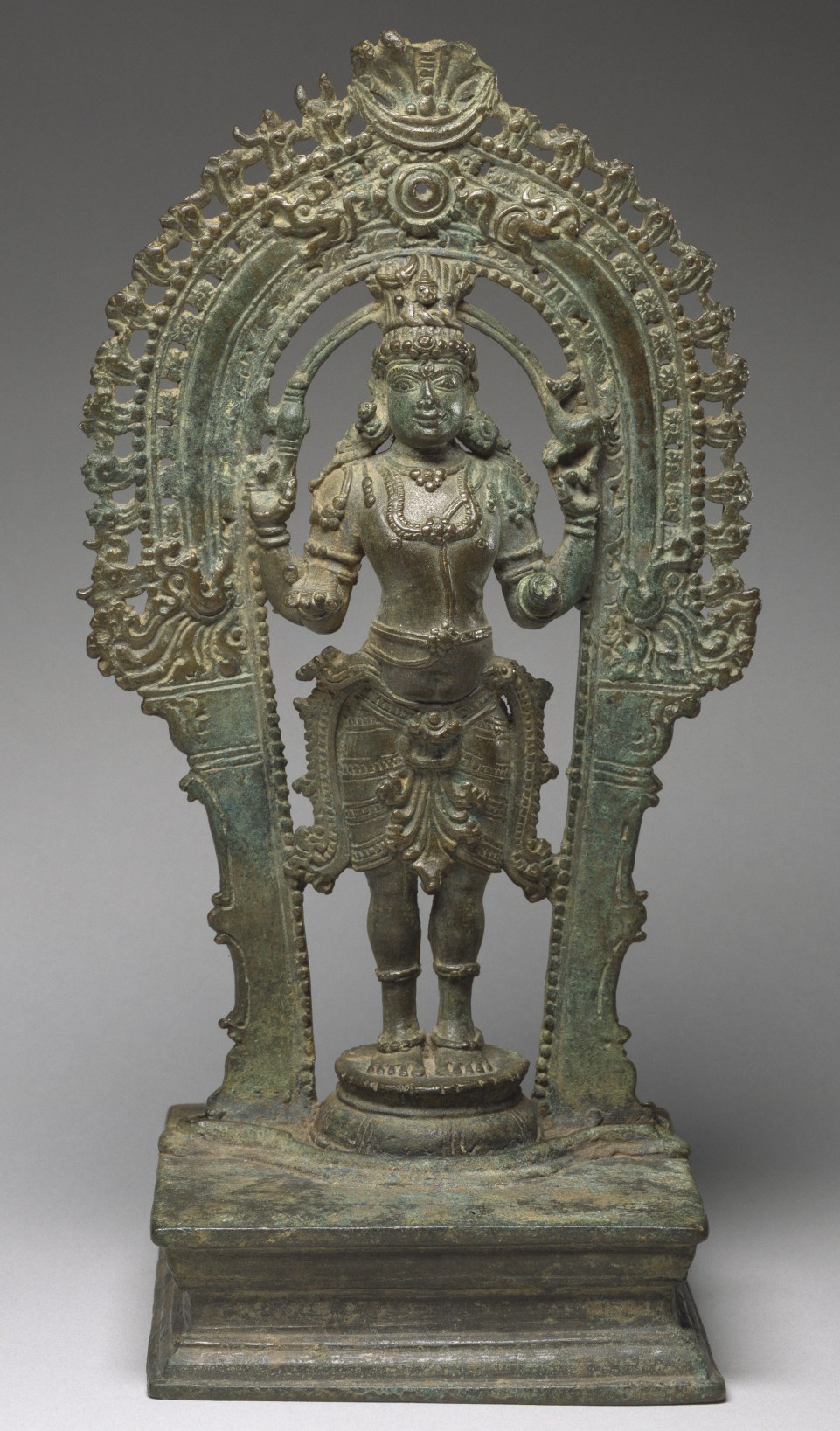
A green-patinated bronze of the four-armed god Śiva standing frontally on a lotus base within a flaming aureole arch, crowned and jewelled; his upper hands held the battle-axe and (now broken off) the cup of world-poison whose venom turned his throat blue.
Hindu

Shiva Drinks the World-Poison

The oldest telling spends one line on it: he held the venom in his throat and so is called the blue-throated. A thousand years later the same moment becomes a god choosing, out loud, to die for the world.

6 minMahābhārata

The archive keeps growing.

Every retelling is drawn from the poets who first told it. Hesiod, Homer, Ovid, the Eddas. The sources are kept honest.